Tongue Tone and Lymph Support: Why Your Jaw and Neck Might Stay "Stuck"
How tongue tension quietly affects the throat, jaw, and that upper-body congestion feeling — and what to do about it
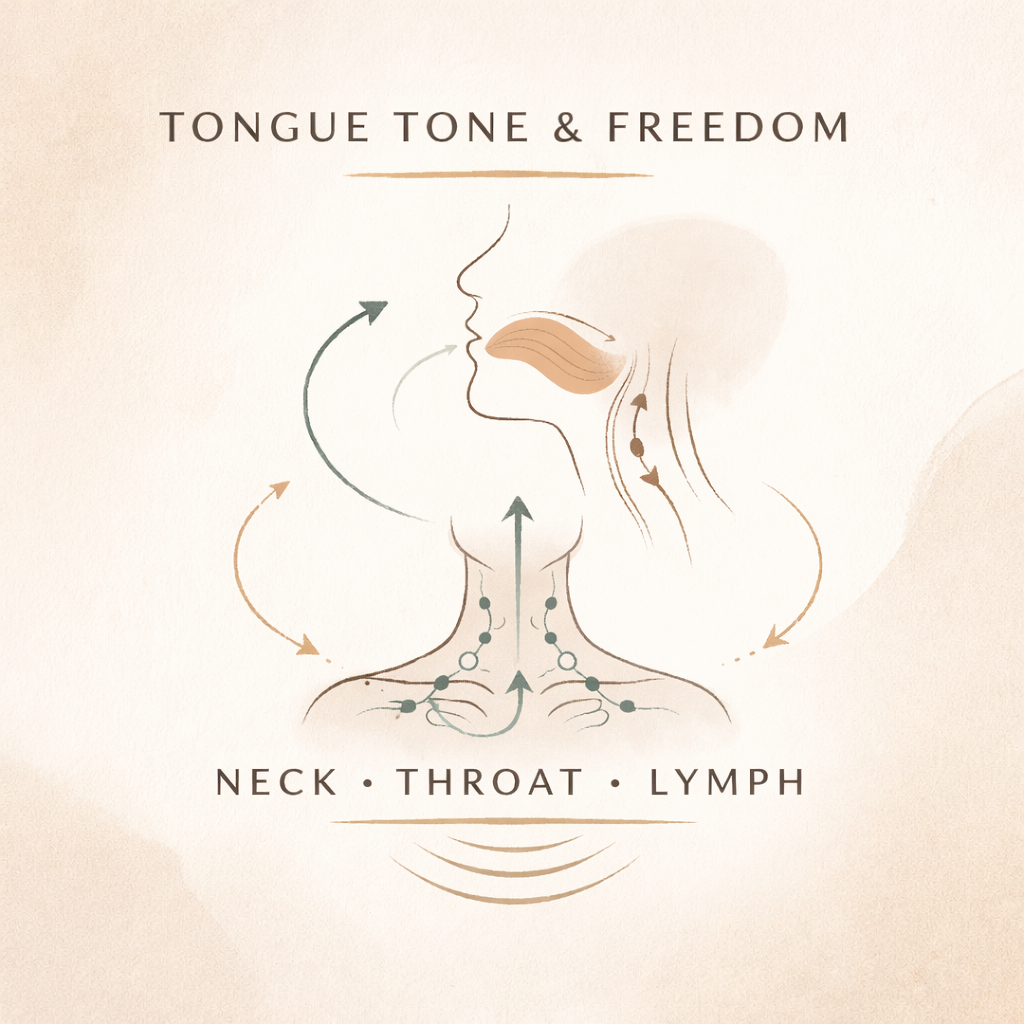
If you tend to feel puffy under the jaw, tight in the front of the neck, or like your upper body is "holding" even when you're doing everything right, there's one place worth checking that most people completely miss.
Your tongue.
Not because the tongue is a magic button. But because tongue tension almost always travels with jaw clenching, mouth breathing patterns, and a guarded throat. That combination changes how you swallow, how your neck organizes itself, and how your ribcage manages pressure. When the neck and upper chest stay guarded, the entire area can feel less mobile — and more congested.
In this article, you'll learn:
Why tongue tone matters for how your neck and jaw feel
The signs that your tongue might be driving the pattern
A simple 3-step approach: release, shape, and posterior tone
Where to grab a free step-by-step guide so you can follow the routine without guessing
Why tongue tone matters more than you'd think
Your tongue isn't just a speech muscle. It's a pressure and coordination organ — and it plays a quiet but significant role in how the whole upper body organizes itself.
When tongue tone is too low, many people unconsciously compensate by:
Clenching the jaw for stability
Tightening the front of the neck during breathing or swallowing
Lifting the upper chest instead of expanding the ribcage
When tongue tone is too high — tense, grippy, or braced — many people feel:
A tight throat
A hard or effortful swallow
A constant urge to brace the jaw or neck
The goal isn't to force anything in either direction. The goal is to restore clean, calm tongue control so the jaw and neck don't have to compensate.
Signs your tongue might be involved
You may benefit from tongue release and strengthening work if:
You clench when concentrating, driving, lifting, or walking
Your swallow feels forced, loud, or neck-driven
You wake up with jaw tension or notice daytime bracing
It's hard to keep your lips gently closed without strain
You feel relief after yawning or humming
You notice puffiness under the chin or tightness at the front of the throat
You don't need all of these. Even one or two that show up consistently is reason enough to try a short reset.
The 3-Phase reset approach
The structure below works especially well for clenchers and over-doers — people who tend to add effort when things aren't working rather than dialing back.
Phase 1 — Release: Calm the floor of the mouth so the tongue can move freely, without dragging the jaw and neck along with it.
Phase 2 — Shape: Train clean tongue control and precise shaping, without recruiting the chin or jaw for help.
Phase 3 — Posterior tone: Build back-of-tongue lift so the tongue can rest where it belongs — without the surrounding muscles bracing to compensate.
The whole sequence takes 2 to 3 minutes, and it tends to be most effective when you keep the effort genuinely low.
Common mistakes that make tongue work backfire
Clenching the teeth. Tongue work is not jaw work. Teeth should stay slightly apart throughout.
Going too hard. If your throat tightens or your neck starts to grip, that's a signal to reduce effort and shorten your holds — not push through.
Treating it like a stretch. This is about coordination and endurance, not maximum range. Smaller and more controlled always wins here.
Quick self-check: how to know it's helping
After the routine, look for:
A softer jaw
A quieter, easier swallow
Less guarding at the front of the neck
Nasal breathing that feels more available
A general sense of space under the chin
If you feel more tension, notice gagging, or find yourself clenching — do less. Gentler is almost always more effective with this kind of work.
If tongue work helps you feel more open in the throat, the next step is pressure management. My 360 Breathing course teaches you how to expand your ribs and manage intra-abdominal pressure so your neck doesn’t have to help you breathe.
The tongue reset helps clear the upper bottleneck. The rest of the system still needs support.
When the jaw and neck stop bracing, the upper body can finally start draining more freely. But if breathing stays shallow, movement stays limited, and the body's daily environment stays the same, that congested feeling tends to creep back.
Lasting change for the jaw, neck, and upper body usually comes from building a daily rhythm that supports the whole system — not just one isolated area.
The 28-Day Lymphatic Reset gives you that structure. A 7-minute morning routine that opens the lymphatic vessels before driving fluid through them. Rotating self-massage sequences that work through the body progressively — including the upper body pathways that stay most backed up. Breathing flows that support internal pressure management so the neck doesn't have to compensate. And a nourishment plan that reduces the acidic load creating inflammation and congestion in the first place.
One payment. Lifetime access. Return to it whenever your body needs a reset.
Want individualized help identifying the structural patterns underneath?
If jaw clenching, neck tension, and upper-body congestion keep returning no matter what you try, this is exactly the kind of pattern I work through with clients in 1:1 sessions.
Continued Reading
Lymph foundation:The Lymphatic System: Your Body’s Hidden Clean up Crew and How Fascia Helps It Flow
Fascia + stuck feeling:The Fascia–Lymph Connection: Why Tight Tissue Blocks Drainage, Detox & Natural Glow
Breath/pressure:360 Breathing: The Key to Optimal Pressure Management and Pain-Free Movement
Fascia primer:Fascia: The Hidden Web That Shapes Your Movement, Posture, and Health