360 Breathing: The Key to Optimal Pressure Management and Pain-Free Movement
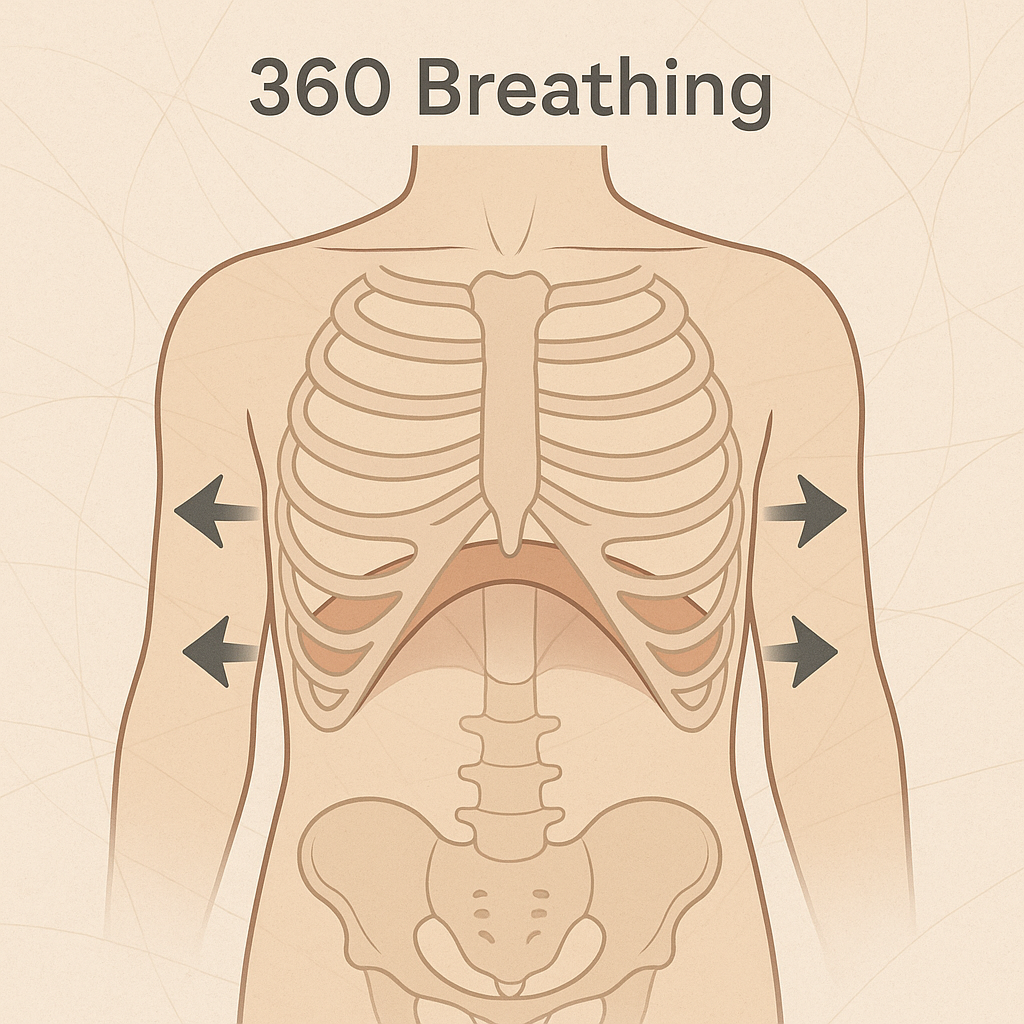
If you have been told to breathe into your belly but still feel stuck in your chest, tight through your neck, unable to expand your ribs, or like breathing drills never quite carry into real life, the problem may not be effort.
It may be that no one has shown you how to create real ribcage expansion and begin to organize pressure through the torso in a way that has a better chance of holding up during movement.
A lot of people are trying to breathe better while still living in the same old pattern: shoulders lifting, chest tightening, belly pushing forward, neck working too hard, and the back ribs barely moving at all.
That is where 360° breathing changes the conversation.
Instead of pushing the breath mostly into the belly or lifting only through the chest, 360° breathing teaches you how to create expansion around the full circumference of the ribcage: front, sides, and back. That changes not only how breathing feels, but how pressure is managed through the torso, how the neck and shoulders behave, and how supported your body feels during movement.
This is one of the most important foundations I teach because breathing is not just about relaxation. It is one of your body’s core pressure-management strategies.
In this article, I’ll show you what 360° breathing actually is, why belly breathing alone often falls short, what common compensation patterns look like, and why so many people can find the pattern in a drill but lose it immediately when they stand up and go about their day.
What is 360° Breathing?
360° breathing is exactly what it sounds like: breathing that creates expansion around the entire ribcage instead of pushing air mostly into one area.
On the inhale, the goal is not just to let the belly rise or the chest lift. The goal is to create a more even sense of expansion through the front ribs, side ribs, and back ribs so the torso can respond more like a full container and less like a system that is overusing one area while ignoring the rest.
When people first hear this, it can sound simple.
But feeling it is different.
Many bodies are organized around restriction, compression, bracing, or compensation. So even when someone understands the idea of 360° breathing, they may still have real trouble finding it without the right setup and cues.
The frustration most people do not talk about
Here is what almost nobody addresses in breathing content:
You do the drill. Something finally clicks. Your ribs move differently. Your upper back gets wider. Your neck softens. Your inhale stops feeling so trapped.
Then you stand up, walk around, reach for something, go through your day, and it disappears.
Most people assume they did something wrong. They go back to the drill, find it again, and then lose it again as soon as real life comes back in.
This is not usually a technique problem.
It is a pressure-management problem.
When you are standing, walking, reaching, and breathing at the same time, your ribcage is managing a much higher level of internal demand. If the underlying pressure system is not yet organized to handle that load, the pattern you found in the drill cannot hold.
That is the gap most breathing instruction never closes.
If this sounds familiar, start here first:
Why belly breathing alone is not enough
Belly breathing has been recommended for years for good reason. It can help people move away from shallow chest breathing and reconnect with the diaphragm.
But belly breathing by itself is not the full picture.
When breath pushes mostly downward and forward into the belly without enough side and back rib expansion, pressure tends to collect unevenly. That can leave the ribcage relatively stagnant while the abdominal wall and pelvic floor take the brunt of the load.
When you only breathe into your belly, you may:
miss access to full ribcage expansion
create uneven pressure through the torso
reinforce forward-oriented posture
struggle to coordinate breathing with movement
keep the back body and side ribs chronically underused
That does not mean belly movement is bad. It means it is incomplete on its own.
What chest breathing often looks like
Chest breathing usually means the inhale stays high in the ribcage and the upper body tries to help.
The neck tightens.
The shoulders lift.
The upper chest takes over.
The inhale tends to stay high and forward, while the side and back ribs contribute very little
This is one of the most common patterns under stress, and it often shows up alongside neck tension, jaw clenching, anxiety, forward head posture, and ribcage restriction.
Chest breathing is not a failure. It is a compensation pattern. Your body is still trying to get air in. It is just doing it through the areas that are most available.
If that sounds familiar, read Breathing Exercises for Anxiety Relief: Why Most Techniques Miss the Real Problem.
What paradoxical breathing is
On the opposite end, some people show a pattern where the belly pulls inward on the inhale and moves out more on the exhale. This is sometimes called paradoxical or reverse breathing.
It usually reflects a body that is managing pressure from a more defensive or braced place, and it often shows up with chronic stress, anxiety, forward head posture, neck and upper back tension, and difficulty fully exhaling.
This pattern can keep the breath high, narrow, and difficult to organize no matter how much someone practices.
If your stress state always seems to show up in your breathing, that is not random. It is often part of a larger guarding strategy. You may also want to read Why You Can’t “Just Relax”: Nervous System Guarding Explained.
Why 360° breathing helps
360° breathing helps because it creates a more even relationship between breath, pressure, and support throughout the whole torso.
Better pressure management - When breath pressure distributes more evenly, no single area has to absorb all of it. That is especially relevant for people dealing with rib flare, abdominal gripping, pelvic floor symptoms, or a body that always feels braced.
Less neck and shoulder overuse - A lot of people try to solve neck tension without ever addressing the breathing pattern underneath it. When the inhale is organized through the ribcage instead of pulled up through the neck and shoulders, those compensation patterns often soften on their own. If your neck or jaw always seems involved, read Neck Tension and Jaw Clenching: How Ribcage Position Changes the Whole Loop (and What to Do Next).
Better access to the back and sides of the ribs - This is the part most people have been missing entirely. If you have never felt your back ribs expand or your side body participate in the inhale, 360° breathing is often the first doorway into that experience.
Better coordination with movement. Breathing is not separate from posture, gait, reaching, or exercise. It is part of all of it. When pressure is managed better, movement tends to feel more stable, less forced, and more connected.
Signs 360° breathing may be exactly what you need
This approach may help if:
you keep getting told to belly breathe but it never fully clicks
your shoulders or neck take over during breathing drills
your upper chest leads the inhale and drops back down on the exhale
your ribs feel rigid, compressed, or hard to move
you cannot feel expansion into your back body
you find the pattern in drills but lose it when you stand up or move
posture work makes you tense instead of supported
your jaw, neck, or upper traps seem involved in everything
If several of those land, this is a very good place to start.
The missing piece most breathing tutorials skip: restriction
Here is what most breathing instruction does not explain:
You cannot breathe well into space that does not exist.
If the ribcage is compressed, the back body is stiff, the side ribs are restricted, or the upper chest and neck are holding the body in an old pattern, cueing “take a deep breath” does not solve much. You are trying to create expansion in areas that do not yet have the mobility, support, or access to receive it.
This is why so many people feel frustrated by breathing drills. And it is why I do not teach breathing as cueing alone.
I teach breathing alongside space-making work. When tissue restriction changes, 360° breathing becomes much easier to access.
If you want a deeper explanation of why space matters, read Fascia: The Hidden Web That Shapes Your Movement, Posture, and Health. If your upper back stays collapsed, your chest feels stuck, or your neck keeps taking over, read Collapsed Ribcage + Serratus Anterior: The Missing Muscle Most People Never Train.
The ribcage, pelvic floor, and pressure connection
For some people, the problem is not just tight ribs. It is the way the whole pressure system is organized underneath the ribs.
If you keep trying to expand your ribcage and feel blocked, especially in the back body or lower torso, there may be a deeper pressure-management issue involved. Some people cannot feel real 360° expansion until they address the pelvic floor, abdominal wall, or a habitual bracing pattern that has been running in the background for years.
If that sounds like you, read Can’t Get 360° Ribcage Expansion? Your Pelvic Floor Might Be Blocking It.
The neck connection you cannot ignore
There is one more layer here that almost never gets addressed.
A lot of people can create more ribcage space in a drill, but as soon as the neck shifts back into its usual pattern, the upper ribs and chest get pulled right back into the old shape.
When the head sits forward and the neck muscles are constantly working to hold the visual field in place, the upper ribs often stay locked into a compensatory strategy. That makes it much harder for the inhale to distribute well, no matter how intentional you are about breathing.
If breathing tends to become neck effort for you, or if jaw tension comes along for the ride, that is not a separate issue. It is part of the same loop.
Start here if you are still guessing
Before you try to force a better pattern, it helps to see what your body is already doing.
In the short video below, I guide you through a simple awareness practice to help you notice:
where your breath naturally goes right now
whether you tend to lead with the chest, belly, or upper ribs
what areas feel easiest to expand
what areas feel blocked, compressed, or absent
The 360° Breathing Mini Course
Understanding the idea of 360° breathing is one thing. Actually feeling it in your body, creating space where you are restricted, and building that pattern under more movement and load is a completely different challenge.
The 360° Breathing Mini Course is built around that gap.
It is for the person who:
understands the concept but cannot feel it consistently
finds the pattern in a drill and loses it when they stand up
keeps ending up in the neck, chest, or belly every time they try to “breathe correctly”
has been working on breathing or posture for months without feeling like it actually sticks
Inside the course, you will build:
the ability to feel your back and side ribs expand more clearly
a quieter neck and upper chest during the inhale
a more even sense of pressure through the torso
better support that starts to show up more consistently in posture and movement
more confidence that you are actually doing it, not just guessing
This is not a collection of breathing exercises.
It is a progressive framework that helps you move from “I can sometimes find it in a drill” to “my body is actually starting to organize around this.”
Common questions
What if I have tried breathing work before and it never helped?
That is one of the most common things I hear. Usually it means the instruction you had was cue-based without addressing restriction, setup, or pressure management. The approach here starts with where your ribcage actually is, not where it is supposed to be.
What if I cannot feel my back ribs at all?
Very common. It usually means you need better setup, better access to space, or less compensation through the neck and chest first. It does not mean you cannot get there.
What if I keep finding the pattern in drills but cannot hold onto it?
That is exactly the gap this work is designed to address. Finding it once is the first step. The next step is building enough space, pressure awareness, and coordination that the pattern starts to hold under more movement and load.
How long does it take to feel a real difference?
Building a new pattern that starts to hold up better under daily movement takes repetition, but many people notice meaningful change within a few weeks of consistent practice.
Is this helpful for pelvic floor issues?
It often can be, because more even pressure distribution means less load going entirely downward or forward. If you have significant symptoms, working alongside a pelvic floor therapist is still a good idea.
What if I have rib flare or diastasis?
With rib flare or diastasis, the goal is not to shut down the front ribs. Many people still need better expansion there, especially if the upper front ribs are compressed. The goal is to improve expansion and pressure management more evenly through the whole ribcage, so the front is no longer compensating without enough support from the sides and back.
When you need more than a course
The course is a strong starting point for most people.
But if you are dealing with chronic pain that has a strong breathing component, significant ribcage restriction, scoliosis or postural asymmetry, or a body that stays braced no matter what you try, you may benefit from more individualized support.
If you want help applying this to your specific posture, movement, pain, and compensation patterns, that is exactly what 1:1 coaching is for.
Take the next step
Most people struggling with breathing are not lacking effort.
They are lacking a framework that helps the ribcage, pressure system, and support muscles work together, so the pattern can start to hold beyond the drill.
If this article sounds like your pattern, here is where to go next:
Ready to build the full progression? Start with the 360° Breathing Mini Course
Want help applying this to your specific body? Work With Me 1:1
You do not need more reminders to take a deep breath.
You need a body that can actually receive and organize one with less compensation.
That is where things start to change.